FastFrames S MLX: what the Mac version of Apple’s video model is
FastFrames S MLX is an unofficial community port of Apple's 1.3B video model FastFrames-S to Apple silicon Macs (Apple's own release needs an NVIDIA GPU) that makes a 5-second 480p clip from text; this site does not run FastFrames or any text-to-video model, but its photo editor edits one photo in about 37 seconds for 10 credits. Free with sign-up: 10 credits = 1 image, then from $0.13 per image, and its video tool turns one photo into a silent 5-second clip for 15 credits, paid credits only.
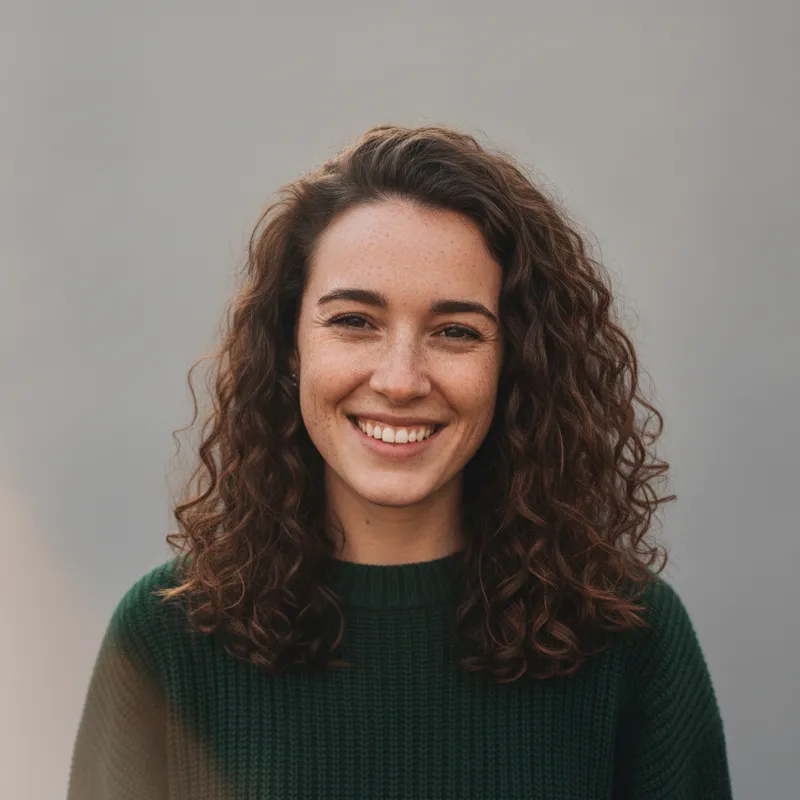
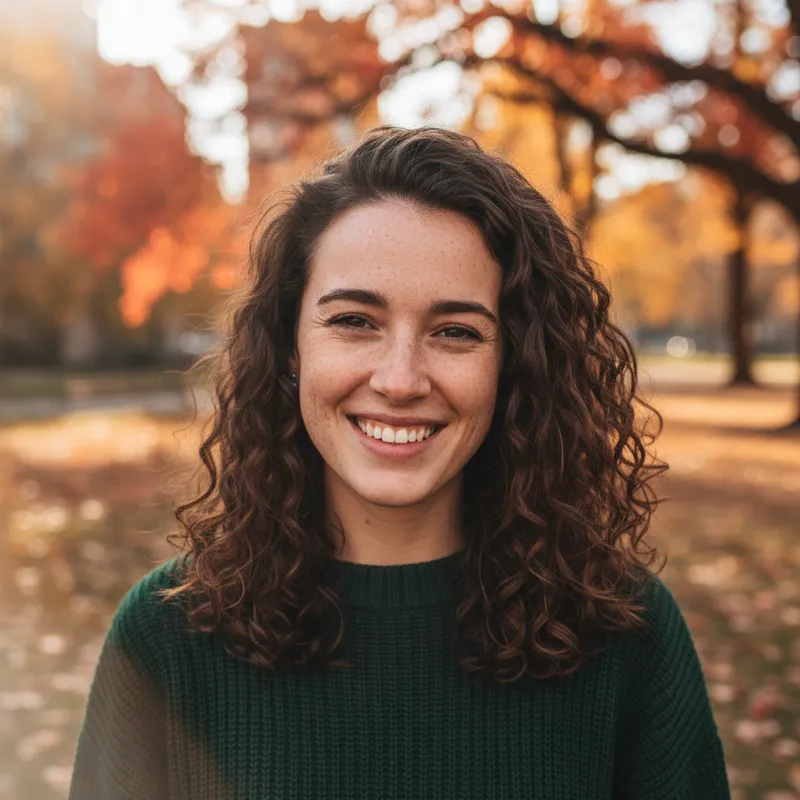 Your photo
Style changes (cartoon, 3D, anime) are not reliable yet. If the result looks unchanged, try again or describe the change more specifically.
One-tap edits
- Not Apple, not the port authors
- This site does not run FastFrames
- Free with sign-up: 10 credits = 1 image
- parameters of FastFrames-S (Apple’s card); L has 14B
- 1.3B
- one 5-second clip on a 64 GB M5 Pro Mac mini, one run reported by a port author
- 30.4 s
- the mlx-community port’s files (our sum of its file list)
- 15.15 GB
- what Apple’s licence on the weights allows
- Research only
What FastFrames S MLX is
Apple’s release: no MLX in it
- FastFrames-S is the 1.3B model of Apple’s FastFrames pair (the other is the 14B FastFrames-L): an autoregressive, two-step video diffusion model that makes 480p video from a text prompt. Apple’s card and README ask for Linux x86-64, an NVIDIA GPU and a CUDA 12.8-compatible driver. We searched the card, the README and the installation guide for “mlx”, “Apple silicon”, “Mac” and “Metal” and found no mention of any of them.Source: Hugging Face card (apple/FastFrames-S) ·
- So “FastFrames S MLX” is not an Apple product name. MLX is the array framework for Apple silicon that the port authors target; the Mac versions below are re-implementations of Apple’s inference code by outside developers. The repos were created on 2026-11-18, two days after Apple’s own on 2026-11-16 (Hugging Face API).Source: Hugging Face API ·
- What we found: Hugging Face’s model search for “fastframes” shows two MLX ports, both of the small S model, and none of the 14B L. Ports with other names, or on other sites, were not searched.Source: Hugging Face model search ·
Port 1: pratikgx/FastFrames-S-MLX (code, no weights)
- The card calls it an unofficial MLX port of FastFrames-S. The repo holds the inference code and one example clip, and does not re-host any weights: at the first run the script downloads Apple’s two small networks, a 1.3B generator checkpoint from Causal-Forcing and the umT5 text encoder (about 11 GB) and converts them in memory. Our sum is about 18 GB of downloads (0.95 + 5.68 + about 11).Source: Hugging Face card (pratikgx/FastFrames-S-MLX) ·
- It needs an Apple silicon Mac, Python 3.12 and ffmpeg. The author reports one run on a 64 GB M5 Pro Mac mini: 30.43 s to generate the 81 frames, 375.7 ms per output frame, MLX peak memory 22.93 GB, process peak 30.37 GB, 35.9 s wall clock including load. The card itself says this is one run with one seed.Source: Hugging Face card and benchmark dataset ·
- Limits the author lists: 13 CPU tests against Apple’s PyTorch reference plus that one Mac run, no side-by-side comparison with the CUDA output, 4-bit and 8-bit options untested, and FastFrames-L (14B) not implemented.Source: Hugging Face card (pratikgx/FastFrames-S-MLX) ·
Port 2: mlx-community/FastFrames-S-bf16-mlx (weights included)
- Its card calls it an unofficial community port, “not made, reviewed or endorsed by Apple”. It ships converted weights: by our sum of the file list, 2.84 GB generator, 0.69 GB refiner, 0.26 GB pixel decoder and 11.36 GB text encoder, 15.15 GB in all, which matches the card’s “about 15 GB”.Source: Hugging Face card (mlx-community/FastFrames-S-bf16-mlx) ·
- Its author reports an Apple M3 Max with 36 GB: about 55 to 61 s per clip on a quiet machine, about 90 s while other GPU work runs, and a peak of about 11 GB. The card adds that only the M3 Max was tested and that machines with 16 GB or less “may not” have room for the 11 GB peak.Source: Hugging Face card (mlx-community/FastFrames-S-bf16-mlx) ·
- On quality, the same card says fine detail is soft, faces and hands are often weak, only English prompts were tested, and short prompts follow the text loosely: its own corgi example shows the dog swimming rather than surfing. It says this matches Apple’s S model and is not an effect of the port. We did not check any of this.Source: Hugging Face card (mlx-community/FastFrames-S-bf16-mlx) ·
The licence
- The licence file in Apple’s S repo grants a personal, revocable licence to use, copy, modify, distribute and create derivatives of the model exclusively for Research Purposes, defined as non-commercial scientific research, and says that does not include commercial exploitation, product development or use in any commercial product or service. The same terms apply to FastFrames-L. This is not legal advice.Source: LICENSE file in apple/FastFrames-S ·
- Port 1’s “mit” tag covers only the port’s Python code. Its card says the Apple networks it loads stay under Apple’s research licence. Port 2 states that the Apple licence applies to the port as a whole, so use of it is limited to research.Source: Hugging Face cards of both ports ·
Our arithmetic, not a test
- Apple’s S README lists a total of 35.4 ms per frame on one GPU, and the paper puts it at 36 ms on a B200. Port 1’s reported 375.7 ms per frame on the Mac mini is about 10 times that. The hardware and the code both differ, so this is not a fair speed comparison, only a sense of scale.Source: GitHub README and Port 1’s benchmark ·
- The two Mac reports do not line up: 30.4 s on a 64 GB M5 Pro for Port 1 against 55 to 61 s on a 36 GB M3 Max for Port 2, and 22.93 GB against about 11 GB of peak memory. Different machines, different code and possibly different ways of measuring: we cannot say which port is faster or lighter.Source: Both port cards ·
On this site
- The 14B sibling explained from Apple’s own pages: what it is, why it is not frame interpolation, its licence and its 30.6 GB of files, read on 2026-11-19.Source: FastFrames L: what Apple’s video model is
- Another open video model explained the same way: LongCat Video, its MIT licence and fal.ai’s prices per second.Source: LongCat Video: what it is and where to run it
- To change a still photo instead, write the change in the AI photo editor: up to 400 characters, about 37 seconds, one image out.Source: AI photo editor: type the change
- All of this site’s photo effects in one list.Source: All AI photo effects
Not confirmed
- Whether either port runs on a Mac with less than 36 GB, or on an M1 or M2 chip: only a 64 GB M5 Pro and a 36 GB M3 Max were reported. Why the two ports report 22.93 GB and about 11 GB of peak memory.Source: Both port cards ·
- Output quality compared with Apple’s CUDA release: Port 1 says it did no side-by-side comparison, and Port 2 compares only against its own full-precision run. Image input: neither card mentions it. Independent tests of either port: we found none.Source: Both port cards ·
- Whether the port code is safe to run. We did not install either port or read its code. Running it means executing someone else’s Python and downloading 15 to 18 GB.Source: This page ·
Side by side
FastFrames S MLX: the two Mac ports, and this site
| - | pratikgx port | mlx-community port | This site |
|---|---|---|---|
| What comes out | Video, 5 s, 832 × 480, 16 fps | Video, 5 s, 832 × 480, 16 fps | One image, 1024 × 1024, or a silent 5-second clip from one photo |
| What goes in | A text prompt | A text prompt | One photo and your written change |
| Downloads | About 18 GB at first run (code repo has no weights) | 15.15 GB, weights included | Nothing to download |
| Reported machine | 64 GB M5 Pro Mac mini | 36 GB M3 Max | Any browser |
| Time per clip or image | 30.4 s generating (one run) | 55 to 61 s on a quiet machine | About 37 s |
| Peak memory reported | 22.93 GB (MLX); 30.37 GB (process) | About 11 GB | Not applicable |
| Licence | Code MIT; Apple’s weights research only | Research only, as a whole | 10 credits per image |
Where to run it
How to run FastFrames S MLX on a Mac
Check the licence and the machine first
Apple’s licence on the weights allows research use only, and both ports pass that on. Both need an Apple silicon Mac. Reports exist for a 64 GB and a 36 GB machine; for 16 GB or less, Port 2’s card says it may not fit.
Pick a port, and read its code
Port 1 is code that downloads Apple’s weights at run time, about 18 GB by our sum; its card asks for Python 3.12 and ffmpeg. Port 2 ships the weights, 15.15 GB, and asks for Python 3 and ffmpeg. Both are unofficial and we did not read their code, so skim it before running it.
Install and generate
Port 2’s card gives a download with the hf command, pip install -r requirements.txt, then python run.py with a prompt, a seed and an output file. Port 1’s card gives python -m fastframes_mlx.generate with a prompt, an output file and a seed. Long descriptive prompts are reported to work best.
Need the 14B model instead?
We found no MLX port of FastFrames-L, and Port 1 lists it as not implemented. Apple’s L files total 30.6 GB, and its README asks for an NVIDIA GPU. Our FastFrames L page has the details.
Need a still image instead? Use this site
This site does not run FastFrames. Upload one photo and describe the change in the editor, up to 400 characters; its separate video tool turns one photo into a silent 5-second clip for 15 credits, paid credits only.
Prompts
Photo edit prompts for this site’s editor
These prompts are for this site’s photo editor, which edits still images with a different model from FastFrames. We did not run them for this page, and they do not make video.
One prompt per one-tap edit
Remove background clutter
Edit my uploaded photo: remove distracting clutter from the background (stray objects, litter, bins, cables, signs and people in the background) and fill those areas naturally with what is around them. Keep the framing as it is. Keep every face, expression, pose and outfit exactly the same. No text, logos or watermarks.
Plain studio background
Edit my uploaded photo: replace the background with a plain, softly lit light-grey studio backdrop with natural soft shadows. Keep the framing as it is. Keep every face, expression, pose and outfit exactly the same. No text, logos or watermarks.
Professional headshot
Edit my uploaded photo into a clean professional headshot: a smooth neutral grey-blue background with a gentle gradient, soft even studio light on the face, the same crop or a slightly tighter head-and-shoulders crop. Keep every face, expression, pose and outfit exactly the same. No text, logos or watermarks.
Fix the lighting
Edit my uploaded photo: fix the lighting only. Balance the exposure, lift dark shadows on faces, tame blown-out highlights and correct the white balance so skin tones look natural. Keep every face, expression, pose and outfit exactly the same. No text, logos or watermarks.
Warm golden-hour light
Edit my uploaded photo: change only the light to warm, low golden-hour sunlight from one side, with soft long shadows and a warm glow, as if taken shortly before sunset. Keep the scene and framing. Keep every face, expression, pose and outfit exactly the same. No text, logos or watermarks.
Classic black and white
Edit my uploaded photo into a classic black and white photograph with rich contrast, deep blacks, clean whites and fine film grain. Keep the composition exactly as it is. Keep every face, expression, pose and outfit exactly the same. No text, logos or watermarks.
Watercolor painting
Repaint my uploaded photo as a soft watercolor painting on textured white paper, with loose washes and visible brush edges, keeping the same composition. Keep every person and pet recognizable, and do not add or remove anyone. No text, logos or watermarks.
Sharpen and clean up
Edit my uploaded photo: gently sharpen it, reduce noise and compression artifacts, and recover fine detail in hair, fabric and edges, without a plastic or over-smoothed look. Keep every face, expression, pose and outfit exactly the same. No text, logos or watermarks.
Pricing on this site
Credit packs or a monthly plan.
Credits come in one-time packs ($4.99 for 50 credits, $9.99 for 120 credits, $19.99 for 300 credits); each image costs 10 credits. Or pick a plan from $9.90 a month (500 credits), cancel anytime.
Refund policy- Basic · $9.90/month500 credits a month · about 50 images · $0.20 per image
- Pro · $19.90/month1500 credits a month · about 150 images · $0.13 per image
Billed every month and renews automatically. Cancel anytime in Settings; you keep the plan until the end of the month you paid for. Each month's credits are for that month; unused ones expire.
Refund policyPhoto tools on this site
Edit, restore and restyle your own photo with this site’s image model
FAQ
Questions, answered
What is FastFrames S MLX?
FastFrames S MLX is the name of unofficial community ports that run Apple’s 1.3B text-to-video model FastFrames-S on Apple silicon Macs using MLX. We found two on Hugging Face, pratikgx/FastFrames-S-MLX and mlx-community/FastFrames-S-bf16-mlx. Apple released no MLX version itself, as far as its cards say.
Is there an official Apple MLX version of FastFrames S?
Not that we could find. Apple’s card and README ask for Linux, an NVIDIA GPU and CUDA 12.8, and we found no mention of MLX, Mac or Metal in them. Both Mac ports describe themselves as unofficial and not endorsed by Apple.
Can FastFrames S MLX run on my Mac, such as an M1 or a 16 GB machine?
Not confirmed. The ports report a 64 GB M5 Pro and a 36 GB M3 Max, and both require Apple silicon. Port 2’s card says machines with 16 GB or less may not have room for its 11 GB peak. We found no report for M1 or M2 chips or for 8, 16 or 24 GB machines.
How fast is FastFrames S MLX on a Mac, and how much memory does it use?
Reports differ. Port 1’s author measured 30.4 s for one 5-second clip on a 64 GB M5 Pro, with a 22.93 GB MLX peak. Port 2’s author reports 55 to 61 s on a 36 GB M3 Max, with about 11 GB. These are the authors’ own claims on different machines, and we did not test either.
What is the difference between FastFrames S and FastFrames L, and is there an MLX version of L?
S has 1.3B parameters and L has 14B; Apple’s abstract claims L looks better. L’s final files total 30.6 GB by our sum from 2026-11-19, against about 15 GB for a full S port. We found no MLX port of L, and Port 1 lists it as not implemented. See our FastFrames L page.
Can I use FastFrames S MLX commercially?
Not under the licence terms as written. Apple’s licence on the S weights allows use exclusively for research purposes and excludes commercial exploitation and use in a commercial product or service, and the ports carry that limit: Port 2 says it applies to the port as a whole. Port 1’s MIT tag covers only its own code. This is not legal advice.
Is this site FastFrames, and can I make video here?
No. This site is not Apple, does not run FastFrames and cannot make a clip from text. Its own editor uses a different model: upload one photo and write the change (up to 400 characters), or tap a ready-made edit.
Can I try something here for free?
Partly: new accounts get 10 free credits after signing in, enough for 1 free image (once per account, valid for 7 days, while the day's new-account gifts last). Each image costs 10 credits, from $0.13 per image on a monthly plan.
Just need one photo edited?
Upload it, write the change, and download the result in about 37 seconds.
Edit a photo hereIndependent site. Not affiliated with Apple, the authors of the MLX ports, Hugging Face or MLX, and this site does not run FastFrames. Facts come from the makers’ and port authors’ own pages, read on 2026-11-20; their speed and quality claims are not tested by us. This is not legal advice.